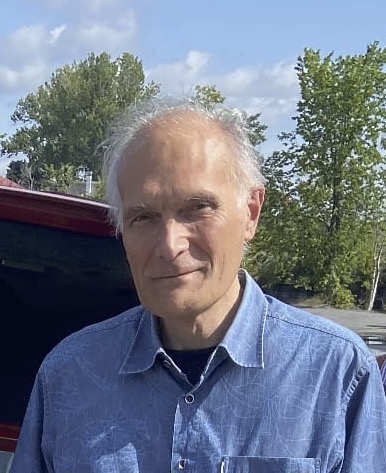
This workshop focuses on recent advancements in evolutionary PDEs and control theory, with particular emphasis on conservation laws and their applications across mathematics and science. Inspired by Alberto Bressan's groundbreaking contributions, the event will explore cutting-edge developments in hyperbolic conservation laws, fluid dynamics, and control theory. Topics include mixing in incompressible fluids, convex integration for Euler equations, energy equality in Navier-Stokes equations, and singular limits in fluid dynamics models. The workshop will also address the theory of control and its applications to real-world problems such as traffic management, resource distribution, and environmental challenges. By bringing together experts in these fields, the workshop aims to stimulate discussion on new mathematical techniques and foster interdisciplinary collaborations, paving the way for future breakthroughs in both theoretical and applied domains.
The workshop aims to present fundamental theoretical advances and the most promising research directions in evolutionary PDEs and control theory. The focus will be particularly on challenging problems arising in the analysis of conservation laws and control theory, and their applications in related areas of mathematics and science. Alberto Bressan's contributions to these fields have been fundamental, often reshaping the research area by solving open problems, introducing completely new techniques, and generating new research directions.
The fundamental progress achieved in recent years by the mathematical theory of hyperbolic conservation laws and fluid dynamics (both classical and non-classical) has opened the door to a host of further advances in theoretical aspects and applications, as well as new research trends originating from surprising and deep connections between nonlinear hyperbolic PDEs and other branches of analysis.
Topics of these achievements include:
- Mixing of incompressible fluids and well-posedness of transport equations for nearly incompressible vector fields
- Convex integration for Euler equations and Magnetohydrodynamics
- Energy equality for the Navier-Stokes equations
- Stability/instability of shear flows for hydrostatic Euler equations
- Transport of vortex points/sheets in fluids
- Singular limits for fluid dynamics models
- Surface waves on the plasma-vacuum interface
- Compactness, regularity, and Lagrangian representation of solutions to hyperbolic conservation laws, possibly in the presence of local or non-local source terms
- Well-posedness of conservation laws in granular flow models
The theory of control provides efficient solutions to many critical real-life problems (such as urban traffic management, traffic networks, smarter cities challenges, waterways or gas pipeline distribution, cost-efficient production lines, control of invasive species, and fire spreading) and constitutes a rich, mostly still unexplored branch of mathematics. Refined mathematical techniques are required to address these problems, e.g., the differential structure and Pontryagin-type necessary conditions for optimality, the controllability of ODEs and evolution equations, and Lagrangian-type approaches to optimality.
15-19/06/2026 @ Università degli Studi di Padova
See the website for details: https://sites.google.com/view/necalb/home
Speakers:
Debora Amadori (University of L’Aquila, Italy)
Luigi Ambrosio (Scuola Normale Superiore, Pisa, Italy) (Online)
Piermarco Cannarsa (University of Roma “Tor Vergata”, Italy)
Maria Teresa Chiri (Queen’s University, Canada)
Giuseppe M. Coclite (Polytechnic University of Bari, Italy)
Giovanni Colombo (University of Padova)
Rinaldo M. Colombo (University of Brescia, Italy)
Adrian Constantin (University of Vienna, Austria)
Jean-Michel Coron (Sorbonne Université-LJLL, Paris, France)
Graziano Crasta (“Sapienza”, University of Roma, Italy)
Carlotta Donadello (Université Marie et Louis Pasteur, Besançon, France)
Olivier Glass (Université Dauphine-PSL, Paris, France)
Paola Goatin (Université Côte d'Azur, INRIA, Sophia Antipolis, France)
Graziano Guerra (University of Milano-Bicocca, Italy)
Helge Holden (NTNU, Trondheim, Norway)
Marta Lewicka (University of Pittsburgh, USA) (Online)
Pierangelo Marcati (GSSI, L’Aquila, Italy)
Elsa M. Marchini (Politecnico di Milano, Italy)
Andrea Marson (University of Padova)
Marco Mazzola (Sorbonne Université, Paris, France)
Tien Khai Nguyen (North Carolina State University, USA)
Michele Palladino (University of L’Aquila, Italy)
Benedetto Piccoli (Rutgers University, Camden, USA)
Franco Rampazzo (University of Padova)
Denis Serre (Ecole Normale Supérieure de Lyon, France)
Fabio Ancona (University of Padova)
Stefano Bianchini (SISSA, Trieste)
Laura Caravenna (University of Padova)
Guido de Philippis (University of Padova)
Donatella Donatelli (University of L’Aquila)
Elio Marconi (University of Padova)
Luca Talamini (SISSA, Trieste)
Sponsored by:
PRIN 2020 “Nonlinear Evolution PDEs, Fluid Dynamics and Transport Equations: Theoretical Foundations and Applications” (P.I. S. Bianchini)
PRIN PNRR 2022 Next Gen EU “Heterogeneity on the Road - Modeling, Analysis, Control” (P.I. R. Bianchini)
H2020-MSCA-IF “A Lagrangian approach: from conservation laws to line-energy Ginzburg-Landau models” (P.I. E. Marconi)
Gruppo Nazionale per l’Analisi Matematica, la Probabilità e le loro Applicazioni – INdAM
ERC Consolidator Grant 2024 “Regularity and Singularity of Solutions to Geometric Variational Problems” (P.I. G. De Philippis)
Department of Mathematics “Tullio Levi-Civita”, Padova
SISSA-ISAS, Trieste
DISIM - Department of Information Engineering, Computer Science and Mathematics